


A few cars are beginning to get quite long in the tooth these days. The soon-to-die Dodge Challenger is over a decade old now, the current generation ND Miata isn’t far behind the decade mark, The Nissan 370Z soldiered on for donkey’s years until it was recently replaced, and the Pagani Zonda seems to be eternal. The R35 Nissan GT-R is also no stranger to eternal life…
Despite being around since 2007, making it over a decade old as well, the R35 is still with us. Having lived through the era of increased computerization in performance cars during the mid-to-late 2000s, the birth of the excellent Ferrari 458 Italia, the return of Mclaren to road cars with the MP4-12C, three generations of 911 (997, 991, and 992), the initial push for hybridized powertrains in performance cars, and finally the era of vast electrification, you would think Nissan would let the weary eyes of the R35 finally rest. It’s seen a lot, been through a lot, and carried much weight on its shoulders. You would think the R35 deserves to rest.
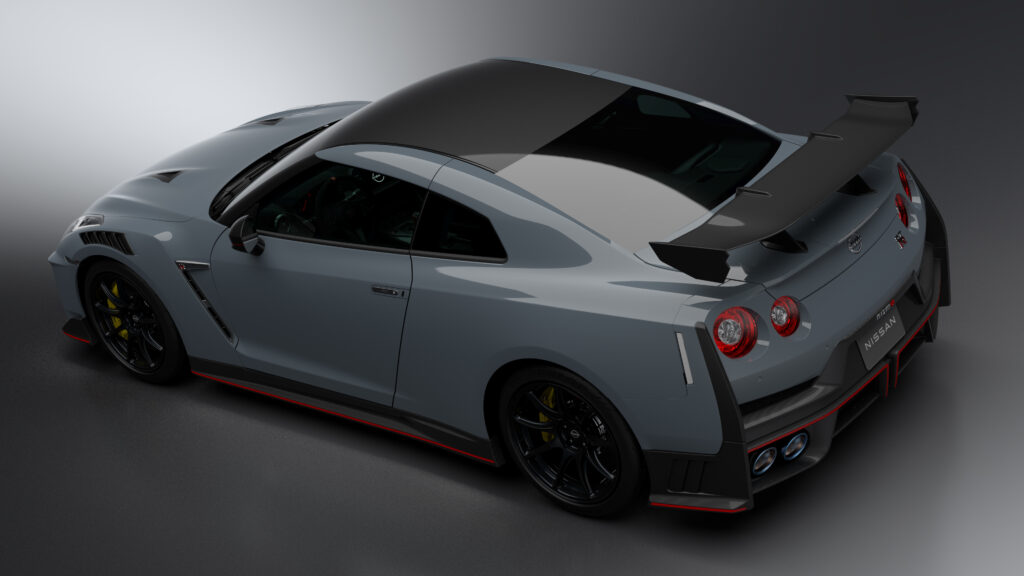
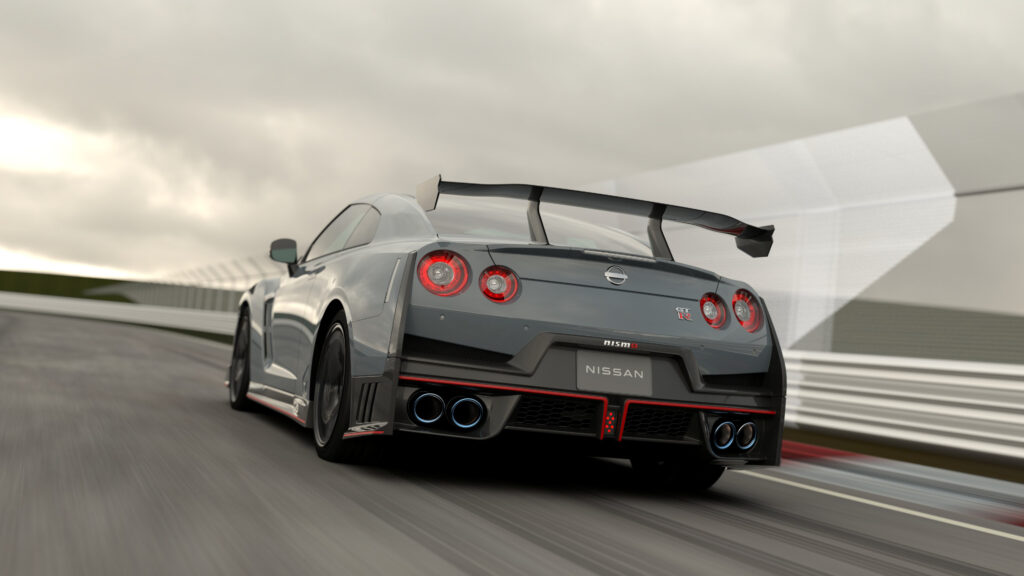
That’s not how Nissan sees things though, as just a few days ago, they released yet another facelift of their rapidly aging sports car. I won’t get into the public’s thoughts of the looks here (as well as my own), but let’s just say things seem to be split among car enthusiasts…
What enthusiasts aren’t split about is the reality that Nissan needs to let this car go, and finally usher in the next generation of Godzilla (not to be confused with the Ford V8 of the same name). Let’s dive into why.
Why People Are Bored With The R35
Car enthusiasts are a fickle bunch more often than not. One day they’re proclaiming their love for a car, the next they’re saying it’s time for it to be replaced. Then after that they say the old car was better and the automaker should’ve stuck with it. Car enthusiasts can be frustrating for automakers as well as other enthusiasts because they rarely seem to keep their stories straight. A great example of this is the Dodge Challenger, where one group of people complain about it being too old, heavy, and behind the times, another group says it’s fine just the way it is, while another group (or even the same group as the first in some circumstances) do a complete 180 and praise the car for not giving into modern –and generally depressing– automotive trends. Do you like the Challenger and its old-school sensibilities, or do you want it to finally modernize? Make up your mind.
The R35 fan base suffers from similar schizophrenia, but it’s not exactly the same. Where the modern Challenger made no bones about the fact it is (soon to be was) a throwback to the muscle cars of yesteryear, the R35 went in completely the opposite direction, promoting its complex technology and innovation. The R35 was not a wistful eye to the past, but a foot in the future.
The inherent problem with a car heavily valued on its innovation is that it has to always innovate. Where the 911, Miata, Challenger, Viper, and many other cars evolve a proven and loved formula without much backlash (executed well of course), cars that innovate can’t look back (at least not significantly). From a design standpoint, this is exactly the philosophy of Lamborghini, where each next-gen big V12 model looks completely different from the prior car (save, arguably, for the Aventador, where its design language was –more or less– previewed by the Reventon). This is true of the Mercedes S-Class as well, where each new generation shows not only the technologies likely to trickle down to “normal” cars in about 5 to 10 years, but likely to trickle down to the E-Class and C-Class a bit sooner than that.
All that is doubly true for the R35, thanks to how much of a fuss Nissan made about it being a technological marvel. Plus, you know, how effective all that technology turned out to be when the car launched.
Naturally then, people want to see what Nissan could do with an R36 given how much better computers have become. The R35 was a supercar killer in its heyday, so imagine how immense an R36 would be. That’s not to say Nissan hasn’t refined the R35 over the years and improved the tech, they obviously have, but those were evolutionary changes for a car meant to be revolutionary.
And This Is The Problem
So what do you do when the revolution has long since happened? What do you do when the once innovative, forward-thinking ideas become commonplace? In the automotive world, you look for the next innovative and ground-breaking idea (cough the design of flagship Lamborghinis and the technology in the S-Class cough). It’s part and parcel for cars aiming to be revolutionary, and a requirement for cars that make it their entire reason for existing. That latter part being especially true of the R35 of course.
This is why, when I saw someone criticizing GT-R fans for complaining about the release of the new facelifted GT-R, I wasn’t sold on the critique. Loosely, she was saying it was hypocritical GT-R fans were crying over the fact the GT-R might die soon, only to lambaste Nissan for showing it wasn’t. Fundamentally, she gets the issue GT-R fans have with the R35 wrong. It’s not that they want the GT-R as a whole line to die, otherwise they wouldn’t have been mourning its potential death for months, it’s that they’re tired of Nissan stringing the R35 along in a sort of “will they won’t they” way. No GT-R fan wants the whole GT-R “brand” to fly into the ether, they just want something to come after the R35, and Nissan is clearly not delivering there.
What do you think though? Are you with the complainers on this one or do you think they’re being just as hypocritical as they usually are? Let me know in the comments below.