


In an interview years ago, Ralph Gilles (then head of the short-lived SRT standalone brand) was being asked about the newly released SRT Viper TA. During the questioning, he remarked (and I’m paraphrasing here) “people were surprised the TA wasn’t that much faster than the GTS, but that’s the point: They’re all fast.” and that line always stuck with me. Even when the Gen 5 was brand-spanking new, enthusiasts and non-enthusiasts seemed to underestimate just how fast this new snake really was. A notion that only grew once the Gen 5 ACR was released. While I’m quite a few years late (to posting this article on this site), I figured it couldn’t hurt to give everyone a reminder of how potent the Gen 5s venom truly was.
Note: All lap times shown here were set by Laguna Seca ace Randy Pobst for fairness. Additionally, just to explain the title for a moment, there are numerous variables that can impact lap times. Variables such as plain old human error, more nuanced things like track condition, track grip (whether the track has “rubbered up” or not), the weather and all its uncertainties, car setup, tire condition, tire type or compound, and much more. Sometimes to such an extent a lap time can be affected by five-tenths of a second or more (even when in the same car). Additionally, some tracks suit some cars better than others. Because of this, I strongly believe laps separated by around five-tenths of a second are at the mercy of any of the aforementioned variables. Thus, it’s far more accurate to say one car matched another for pace rather than beating it.
Lastly, the SRT Viper GTS –at the hands of Randy Pobst– set a lap time of 1:34.23. Without further delay, here’s the list!
10: The Jaguar F-Type V8 S
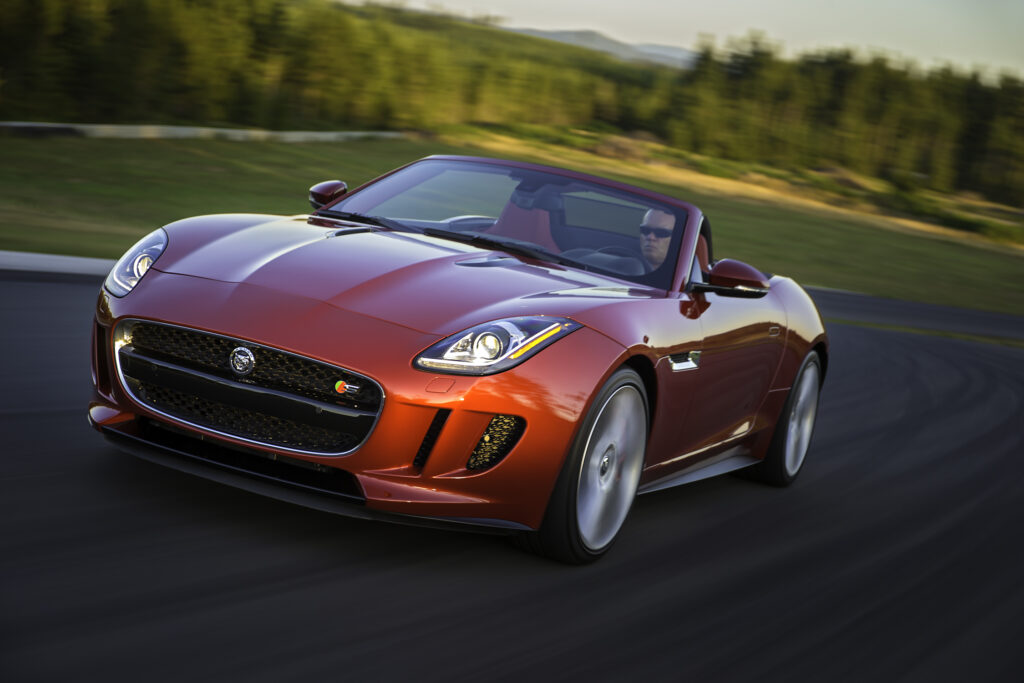
Let’s be real: Excluding the Project 7, the F-Type was never billed as a track car or even a track-oriented street car (Vipers, Z06 Vettes, etc). Since birth, the F-Type was intended to be an honest-to-goodness sports car like non-GT 911s and low-level Corvettes. Just a sporty car with a focus on handling yet still comfortable enough to be driven on the street in civilized fashion. Obviously, this starkly contrasts the Viper’s mission statement, so why am I including the Brute from Britain? Simple: I have a sneaking suspicion there are a number of people that believe the Viper would genuinely lose to the woefully outgunned F-Type, and I want to show those people they are sorely mistaken.
If you recall, the Dodge –then SRT– Viper GTS clocked a time of 1:34.23, so what do you reckon the F-Type did it in? 1.35.x? 1:36.x? Maybe even a 1:37.x? Wrong on all accounts! The F-Type managed a somewhat slow 1:40.81. Keep in mind, the V8 S would soon morph into the F-Type R, meaning the V8 S was equipped with a 495 Horsepower, 460 lb-ft of torque supercharged 5.0-liter V8. That’s more firepower than the similarly new –for the time– C7 Stingray, yet even the base Stingray was quicker. With a time of 1:38.28, the less powerful, slightly lighter, less “sophisticated” Corvette crossed the line sooner than the top-of-the-line F-Type! Ouch…
9: The Ferrari F12 Berlinetta
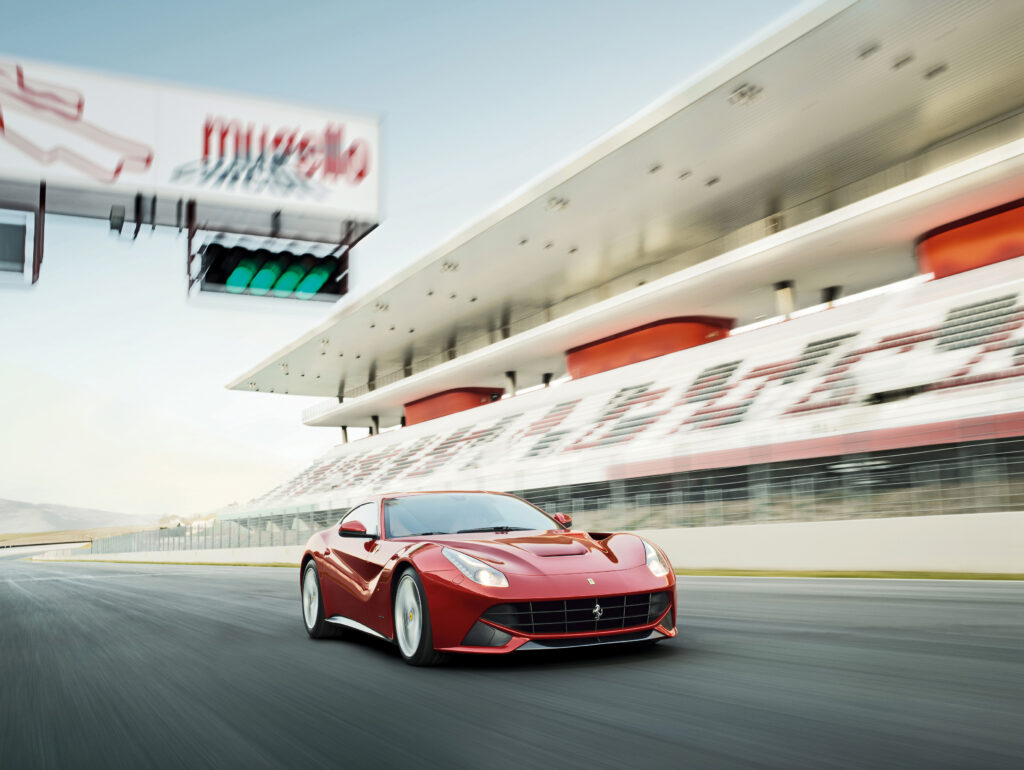
Yep, the venomous snake even defeated the mighty stallion. If you’ve forgotten (or want a refresher anyway), then let me tell you just how potent the F12 Berlinetta is: 730 Horsepower and 506 lb-ft of torque coming from a naturally-aspirated 6.3-liter V12, a top speed of around 211 MPH, lighter than the 599 (its predecessor), more aerodynamically efficient than the 599, and various aerodynamic tricks to manipulate the air better. Make no mistake, despite the F12 being on this list (and being very high on this list), it’s not an incompetent car.
Even still, 1:38.04 is notably lackluster for a car with such performance figures. Worse, the Viper is down nearly 100 horsepower and still 4 seconds faster. Worse than even that, the F12 barely outperforms the significantly less powerful C7 Corvette Stingray (1:38.28 for those with short memories). Why is the F12 so slow at Laguna? Much of this is due to weight. MotorTrend found out their F12 (the one used for the lap) was a smidge over 2-tons (4,003 pounds to be exact). That makes the F12 over 600 pounds heavier than the Gen 5 Viper, and over 500 pounds heavier than the base C7 Corvette! As great a car as the F12 is, Ferrari intended it to be a GT car, and the weight penalty it took in order to fulfill that role means slower lap times at the track.
8: The Lexus LFA
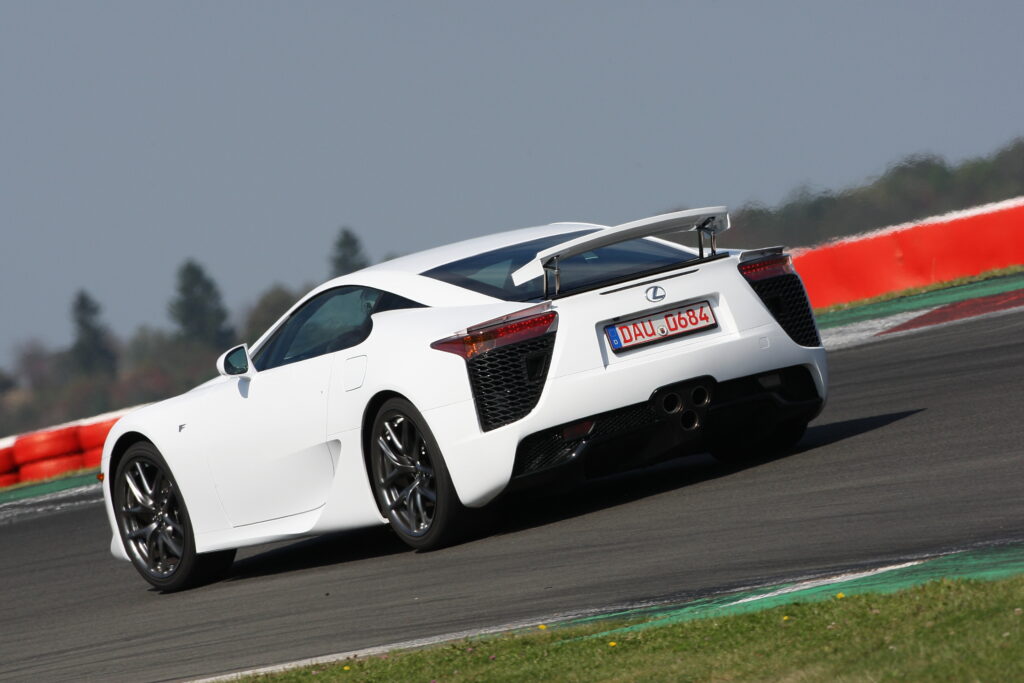
Ah, one of the darlings from the 2010s automotive era. What can be said of the Lexus LFA that hasn’t already been stated? Well I can think of one thing, but it might cause some commotion: The LFA is slower around Laguna Seca than the Gen 5 Viper.
Now if you subscribe to the idea “newer is always better” then this might be hard to comprehend. The LFA has a completely carbon-fiber body and CFRP (carbon fiber reinforced polymer) chassis, that 4.8-liter V10 masterpiece, an active rear wing, and the absolute best of Toyota’s (and Yamaha’s) engineering nerdiness. Surely, surely, such a technical marvel can’t lose to a car that strongly embodies the principle of KISS (Keep It Simple Stupid), right? I mean, we’re talking so simple the Gen 5 still rides on a steel chassis, has two valves per-cylinder, has an old-school six-speed manual, doesn’t have truly active suspension, no active aero to speak of, 4-piston caliper brakes, low HP per-liter, and was engineered by Dodge. Surely the LFA can’t lose to a car like that, right?
Obviously the LFA did lose given the tone of the prior paragraph, and if I might be so bold: Don’t be so comfortable slamming the Viper or Dodge (SRT) engineers when you know nothing about either. There’s many ways to make a car fast, and many more reasons why automakers choose the paths they do.
Mini rant aside, here’s the damage: The LFA did a time of 1:36.39. A fairly respectable time, but a little sluggish given the other cars on this list. Speaking of which…
7: The Acura NSX
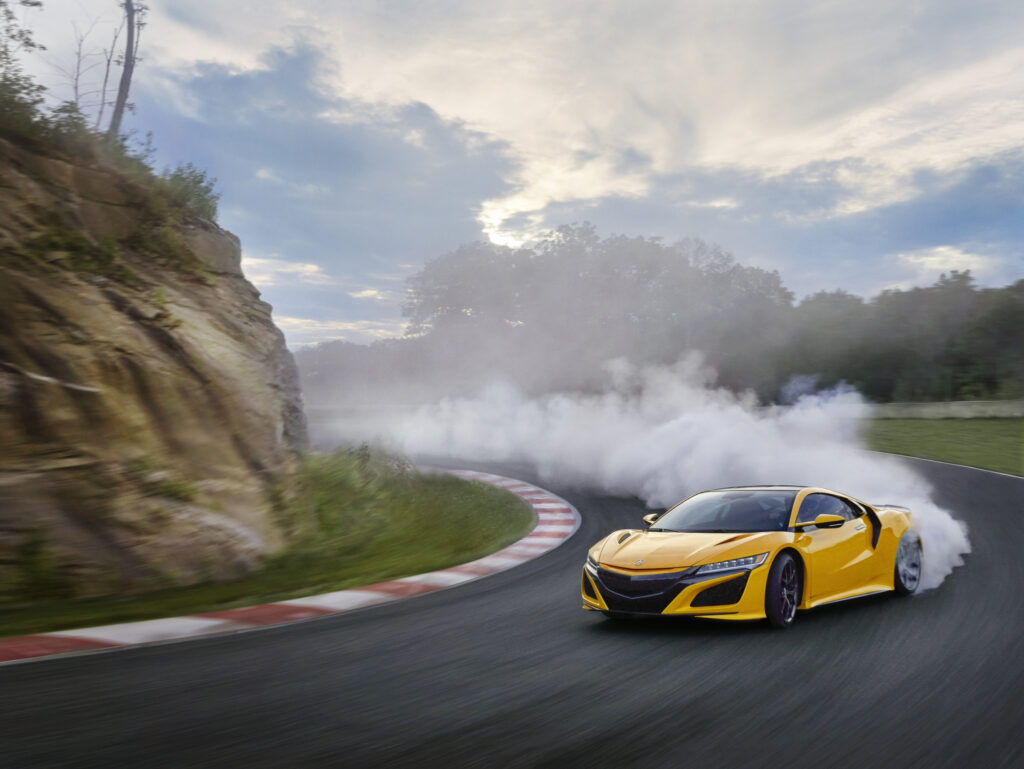
The new-gen Acura NSX was a rather controversial creature when it came out all those years ago. See, many enthusiasts and some older NSX owners were hoping for a modern remake of the original. That means pure, light, RWD, manual, and naturally-aspirated. In other words, a sort of scaled-up Japanese Lotus Elise they had all come to know and love. What Honda/Acura produced, however, was nothing like that.
AWD, no stick-shift available, heavy, twin-turbo, and a complicated hybrid powertrain that gave the car its AWD and heavy curb weight. Safe to say, many in the NSX camp were none too pleased. Especially in regards to the weight, with the new car being almost a thousand pounds heavier than its originator (tipping the scales at a little over 3,800 pounds or 1,700+ kilograms).
Even still, this NSX proved itself to be no slouch, tearing up Laguna Seca at a pace of 1:36.36. Just within the range of the LFA and the following car, but well behind the snake that managed to keep its fanbase happy.
6: The Ferrari 458 Italia
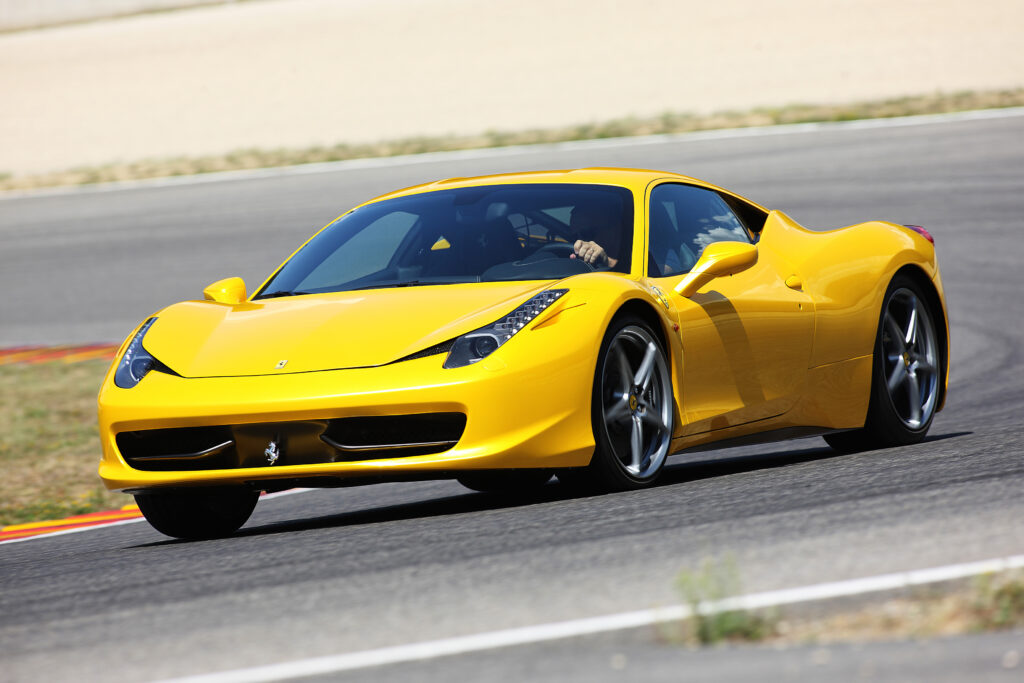
Another car that needs nointroduction, the 458 Italia is arguably one of Ferrari’s all time greats. Gorgeous styling, a screaming 4.5-liter 570 horsepower V8, great handling, that Ferrari “zest” that’s hard to put your finger on, and did I mention the styling? Truly, the 458 Italia is a high watermark in the history of the automobile and an even higher watermark in the history of the supercar. A timeless classic the instant it hit showrooms.
It’s also pretty similar to the LFA! Beyond the obvious, the 458 did a time of 1:36.22, barely eclipsing the whaling Lexus to the line. However, it’s not quite fast enough to beat the king snake, giving up almost exactly two seconds to the Viper.
5: The 2015 Nissan GT-R Nismo (R35)
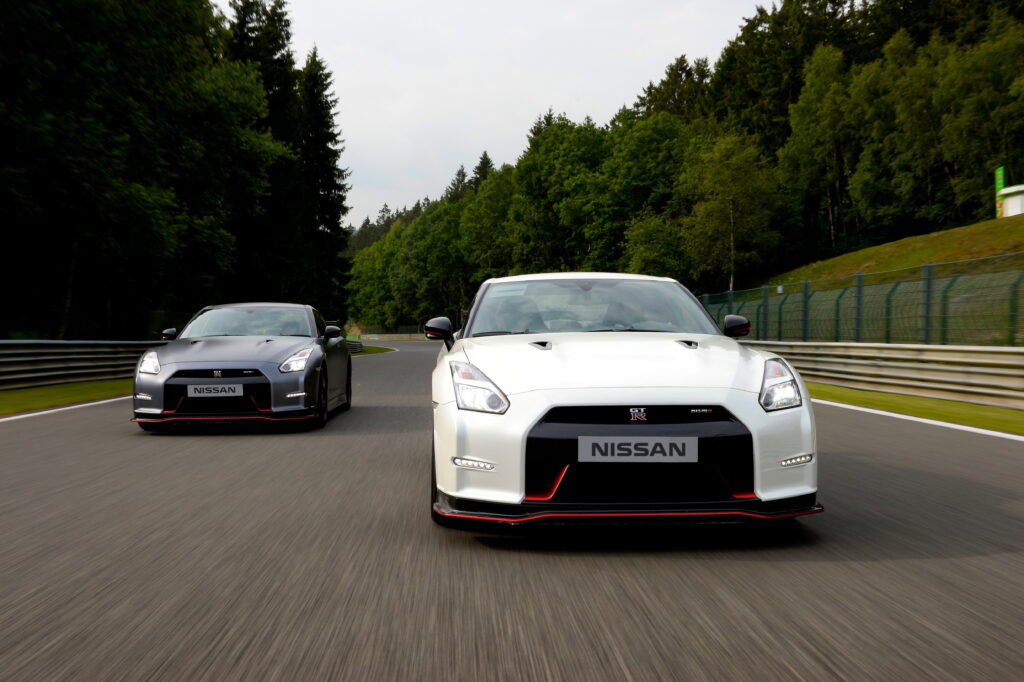
Ah Godzilla, the famed supercar killer of the late 00s and early 10s. Similar to the Big Three, Nissan knew they couldn’t compete with Ferrari, Lamborghini, or Porsche on the metric of prestige when making their new sports car. The name “Nissan” simply doesn’t carry that kind of cache in those circles. However, there was a metric they could compete on: All out performance. Like the Big Three, Nissan threw the book at the R35 GT-R to make sure it could embarrass rival cars costing twice as much. Unlike the Big Three, however, Nissan used as much technology as it could find and produce to achieve this result.
And achieve that result they did. Despite being a “humble Nissan”, the R35 GT-R proved itself beyond capable of hanging with the supercar (and sports car) establishment. Lamborghini Gallardos, Ferrari F430s (soon to be replaced by the 458 Italia), Porsche 911 Turbos (arguably the GT-R’s main rival), no car was safe from the GT-R’s razor sharp edge.
Thing is, that edge was never infallible, and it began to dull as time went on. Even in its fastest iteration, the Nismo, the mighty Datsu- I mean Nissan “only” managed a 1:35.51. Very respectable given the other contenders on this list, but not quite at or near the top like in years past.
4: The Lamborghini Aventador LP700-4
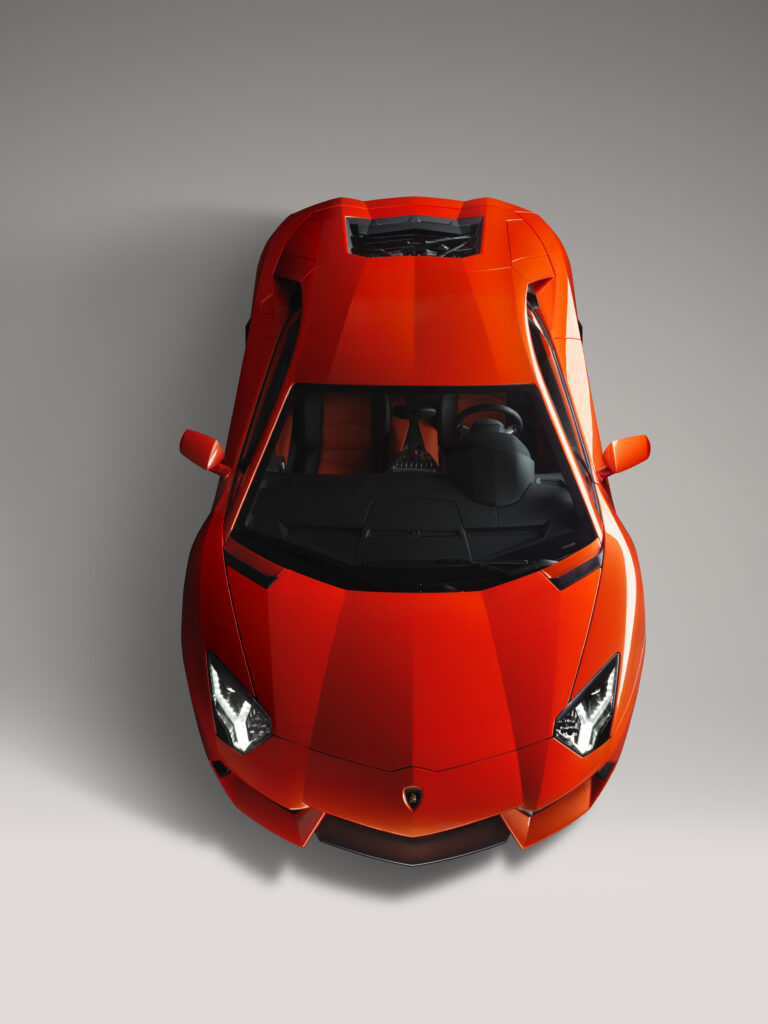
Boy, this list is full of modern classics isn’t it? A very popular car within the Forza community (particularly the younger players), the Aventador quickly became a staple of the 2010s era (right alongside some other cars on this list). With styling reminiscent of military fighter jets (of which the Reventon previewed such styling first), it’s clear the Aventador was destined to continue Lamborghini’s tried ‘n’ true tradition of making some of the best poster-wall cars on the planet.
The insanity doesn’t just end at the design either, as this bull produces nearly 700 horsepower, has 509 lb-ft of torque, a trick (though contentious) 7-speed transmission, and push-rod suspension (the same type of suspension used on Formula 1 cars). Clearly then, a very serious piece of kit indeed.
All this results in a lap time of 1:35.40 around Laguna Seca. Much faster than it’s 700 HP rival (the F12 Berlinetta), but not quite as quick as it’s American step-brother.
3: The Mercedes SLS AMG Black Series
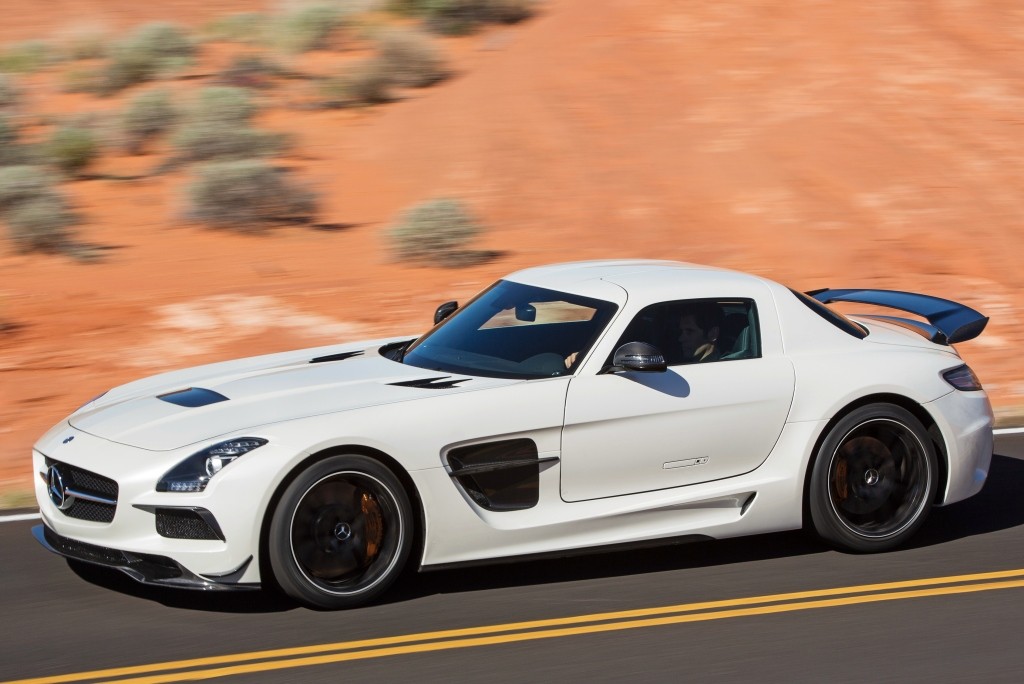
Ah yes, the Gullwing Goliath! Arguably popularized (to some extent) by Top Gear, the SLS AMG is certainly one of the grandest coupes of the modern era. Possessing key features like a very exaggerated dash-to-axle ratio (that is to say, a very long hood indeed), those doors that basically speak for themselves, a glorious high-revving moderately high-displacement V8 engine, and an interior on par with other Mercedes products of the time. If you wanted an Aston Martin One-77 but in a German suit that cost less than a million dollars, the SLS was the car for you.
However, the normal SLS is more “GT car” in orientation. Meant for long trips yet also possessing the ability to competently attack a B-road should the mood call for it. It’s not exactly suited for the track, and Mercedes was well aware of this. They knew there would be some who wanted to take that glorious engine and body to a racetrack for some real fun. Thus, they created the awesomely named SLS AMG Black Series.
Here’s the headline statistics: 631 horsepower, 468 lb-ft of torque (actually less than the standard SLS AMG), and 0-60 in around 3.5 seconds. What those statistics don’t tell you is that the SLS AMG is a bit lighter than the standard car, and a whole lot more focused for the task of devouring a race track.
Thing is, the SLS AMG Black Series is a GT car that’s been morphed into a track weapon, where the Viper is a track-weapon to begin with. This shows in the lap times, as the Black Series clocked in a pretty brisk 1:35.03 lap time. As a reminder, the ’13 Viper GTS clocked a 1:34.23.
2: The Mclaren MP4-12C
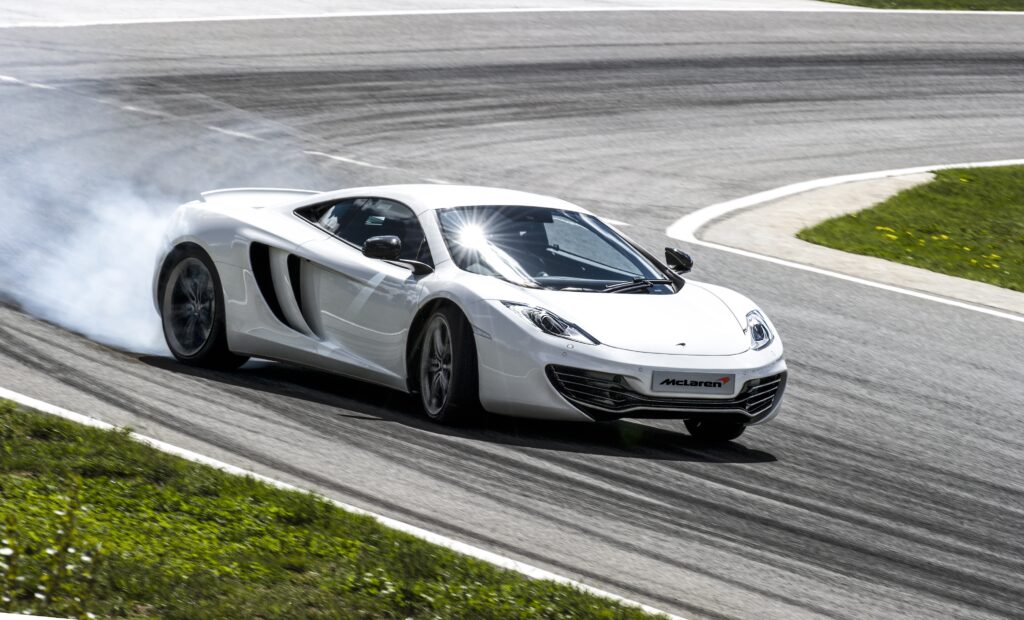
The car with the name of an office phone! Indeed, Mclaren’s naming scheme isn’t exactly the most evocative or creative in the business, but they sure know how to make one hell of a road car. After the joint-venture (and arguably “split personality”) SLR, Mclaren’s next road car made sure no one would find its intentions ambiguous. Thus, the MP4-12C was born.
Outright claimed to be a direct rival to Ferrari’s own crown jewel (the 458 Italia), Mclaren said the 12C was better on a scientific and technical level. Going to so far as to omit an anti-roll bar from the car, opting instead to control each wheel with a computer. This, Mclaren says, allows each wheel to be truly independent. Amazing engineering.
The 12C was also better in simpler ways too, like just having more straight up grunt. Pumping out 593 horsepower and 445 lb-ft of torque, or 31 more horsepower and 47 more lb-ft of torque than the 458 could manage.
All this combined helps the 12C be almost 2 seconds faster than the Ferrari at Laguna, achieving a time of 1:34.50. However, that still puts it a couple tenths down behind the Au Naturel Dodge Viper.
1: The 2017 Audi R8 V10 Plus (Mk.2)
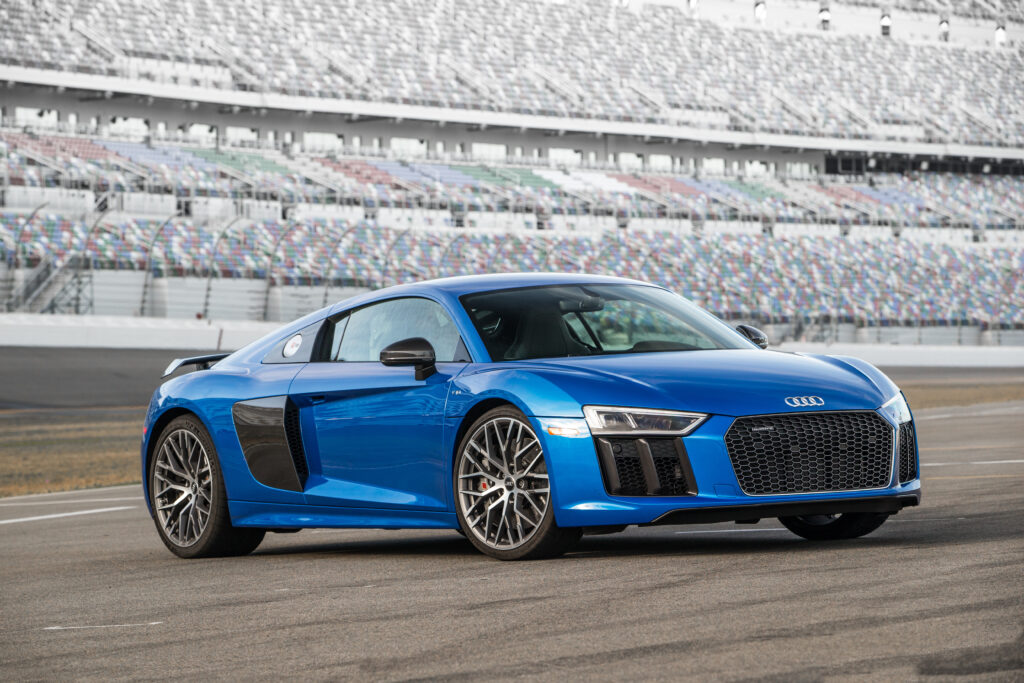
Bet you didn’t expect to see the Audi R8 so high up the list, huh? In a class characterized by its flamboyance, we sometimes forget even the more subdued members can be plenty rapid themselves. Sure the R8 V10 has a Lamborghini-derived engine, but it’s understated looks –for a supercar– belie the Audi’s immense fury and capability on the track. How ferocious is the four-ringed brute in a suit? Try 602 horsepower, 413 lb-ft of torque, and a 7-speed automatic (with manual-mode) transmission that’s more than quick enough to rapidly reengage that glorious firepower.
Excluding the V10, the Viper and the R8 could hardly be any more different from each other. Yet, despite being total opposites, the Audi matched the Viper’s time. Oh yes, the R8 V10 Plus also ran a time of 1:34.23 at Laguna Seca. It’s funny, the Audi is a retrained, reserved, mature supercar with a wild side. While the Viper is a beastly, unhinged, raucous supercar that’s more civil than it lets on.
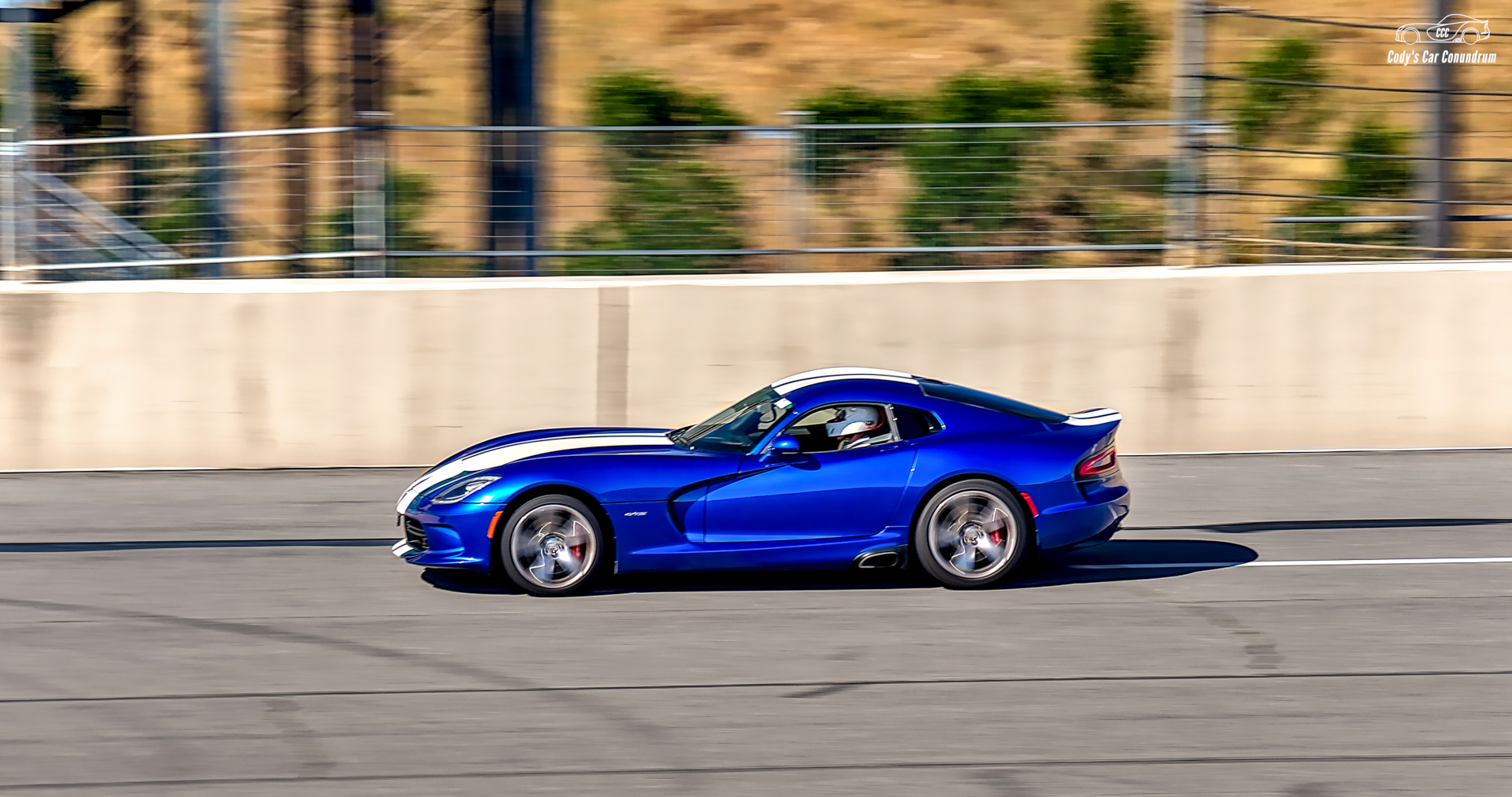
Before I end, I want to clarify something: It might seem like I’m trying to insinuate the Viper is better than all these other cars because it happens to be faster at one track, but that isn’t true in the slightest. Make no mistake, I do fully believe the Viper is the best track car on this list, but that’s not the point of this post. The point is to give empirical proof that the car can not only handle, but is also certainly up there with some of the best performance cars ever made. Fact is a car that doesn’t handle doesn’t go that fast around a track, let alone surpass and match many formidable competitors. It’s not solely because the Viper has a lot of power either, as it’s almost 100 HP down on the F12 yet is significantly faster. Same story with the Aventador (albeit with a smaller power discrepancy). The Viper. Can. Handle.
In any case, there are your 10 cars the Gen 5 Dodge Viper beat or matched around Laguna Seca! Let me know which car you were most surprised to see make the list. While I wasn’t surprised the F12 Berlinetta made the list, it did surprise me just how (comparatively) slow it is…