


I don’t think many other cars are stooped in as much guesswork as the Dodge Viper. From inaccuracies to how it handles, to inaccuracies regarding the car’s weight, I have seen more baseless assumptions about the Viper than I’ve ever seen about most other cars in my entire life. Not just from normal people either, but from car enthusiasts as well! Indeed, the Viper is like that one kid in school whom many people know but few genuinely know. As such, it’s not surprising that people believe a new story or rumor about the car right off the bat when it seems reasonable enough, and that’s exactly the situation we find ourselves in today.
In this case, the story delves into a facet of the Viper’s history I recently (though I imagine temporarily) dropped research on: Pre-Production Viper Development (I’m talking as far back as the ’89 Concept). Last time I was here, my task was to track down the Pacifica Prototype and find out what it was. This time, my task is to corroborate whether or not a very specific De Tomaso Pantera had any kind of connection to the Dodge Viper.
Sounds like a pretty out-there story, huh? I thought so too. I’m not ashamed to admit that despite being fairly well-versed in the Viper’s past, there are still tons of things I don’t know, still tons of things that take me by surprise. So when I saw this story on DriveTribe by motorsport author ThrottleGirl, I immediately wondered if this would be one such case (of many, might I add).
Before I report my findings, let me explain the situation so we’re all on the same page: The story (whether told from the original Car Kings video or ThrottleGirl’s article) basically says that Carroll Shelby bought a 1983 De Tomaso Pantera GT5-S that he collaborated with Chrysler on to hot rod. The result? A Pantera GT5-S with a twin-turbo NASCAR V8 that has a largely unspecified relationship to the Dodge Viper. In slightly more exact terms, the video (and by extension the article) claim that Carroll used this Pantera as a sort of “testbed” for the Dodge Viper.
Now that’s a big claim, one that alters the history of the Viper as we know it if true. So is it true then? Well after a few hours of research, I can confidently say that this story is very likely false. Let’s dive into why…
Problem 1: The Chain Of Events

If there was anything capable of debunking this story in one blow, it’d be the chronology. Timelines are important for stories and rumors like this because if something doesn’t track then that –unsurprisingly– could be the nail in the coffin for the story. To get to that point however, you first need to establish a timeline, so let’s do that.
1986: Bob Lutz makes the move to the Pentastar company after a stint with FoMoCo.
1988: Bob is driving an Autokraft Mk IV Cobra given to him by his previous employer (FoMoCo). Whilst blasting down a nice B-road, he begins to contemplate Chrysler’s current state along with marveling his Cobra. That’s when he has a brain wave: What if Chrysler had its own Cobra? Thus, the nucleus of the Viper was born.
1988 (but slightly later): Bob sits down with designer Tom Gale and Jeep-Truck-Engineering head honcho Francois Castaing to let them in on the secret. As Bob recounts in this story, the trio agree to at least run some preliminary designs and (mechanical) layouts to get the ball rolling. After that, Carroll Shelby and Lee Iacocca were brought into the fold as well.
Even later, a full-scale clay model is complete, and the trio (plus a one Carroll Shelby) all agree to make it a concept car in time for the 1989 North American International Auto Show in Detroit.
1989: The concept is done, unveiled at the North American International Autoshow, and attracts enormous attention from the adoring public. The legend is born.
1989 to 1991: Various Viper development vehicles are created (a few of which we’ll get into later), but the early “full-blooded” cars were VM-01 and VM-02 (VM meaning Viper Mule). After the mules, we got various VP cars (VP meaning Viper Prototype).
1992: The first-gen RT/10 rolls off the production line at the New Mack Assembly plant.
Remember when I told you to keep that 1987 date in mind? This is why. In all recounts of the story (and there are many around the internet plus old magazines), not one of them mentions the date 1987. Worse still, that date is only ever mentioned once in the video itself, but we’ll get back to that point later.
Problem 2: The Assumptions
Clearly, the 1987 date assumes a few basic changes to the Viper story: It assumes Carroll Shelby was the one to actually come up with the idea of the Viper (not Bob), it assumes development started well before it did (later in 1989), it assumes the idea of a mid-engine Viper happened roughly a decade before it came to light, and it assumes Carroll Shelby was more involved with the Viper than he actually was.
Of those assumptions, there are three I’d like to thoroughly go over: The development itself, the mid-engine Viper idea, and Carroll’s role in the development of the Viper. Let’s begin with the first one.
Assumption 1: The development of the Viper

Contrary to what the Car Kings timeline says, development did not start in 1987. While Carroll was at Chrysler in 1987 (and so was Bob for that matter), Bob was the one who had the idea for the Viper, and that thought wouldn’t come to him until a year later. How can development start for a car that wasn’t even a thought yet?
“How can you prove the Viper wasn’t a thought in 1987?” I’m sure you’re thinking, and that’s easy: If Bob had the idea in 1987, the concept car would’ve been revealed in 1988. If you recall, Bob gets the idea in 1988, and the concept car is revealed in 1989. The moment he got the idea, he acted on it, so I see no reason why that would change if the idea struck him a year earlier.
That aside, I’m not suggesting Shelby and Chrysler didn’t collaborate on this Pantera at all. I’m simply suggesting the reason for the collaboration couldn’t have been the Viper, as the very idea for the car hadn’t been proposed to anyone within Chrysler yet (what with the man himself not having the idea until a year later). That Pantera may have ties to Chrysler, but not for anything Viper-related.
You don’t have to take my word for it though, check out this old forum thread on the VCA I found whilst tracking down the Pacifica Prototype:
https://www.viperclub.org/vca/threads/the-very-first-viper.624734/
In particular, scroll to reply number 15 by the SRT Engineers. The whole thread is a great read (and I highly recommend you check it out for yourself), but that reply is the most pertinent to this situation. In that reply, they mention two cars used in the very early stages of the Viper’s development: A 1979 Chevrolet Corvette, and a Shelby kit car. The Corvette came first, having been acquired in the summer of 1989 as a test vehicle for prototype frame parts and suspension geometries. Unfortunately, the purpose of the Shelby was –annoyingly– never stated and the exact date they got the car was never shared either. However, given the Corvette came first (and was picked up in the summer of ’89), it’s safe to say the Shelby likely came soon after. Following those two, the SRT Engineers would create the first full-blooded Viper development car: VM-01 (built-in late 1989 by the way). If they can remember all that, I’m more than willing to bet they’d remember using a Pantera at any point during those early days.
Oh, I forgot to mention: You know the RT/10 concept that kicked this whole thing off? Yeah that was the first Viper built, and it was unveiled at the North American International Autoshow in January of 1989. All those aforementioned development cars came after the show car (as you can see in the timeline laid out earlier). Also laid out in the timeline is when work on the show car began, which was 1988 (shortly after Bob had the idea). If the Pantera was genuinely a development car –to any extent– for the Viper, then it would’ve been bought sometime in 1989 along with the other test vehicles. If the Pantera inspired the Viper, then that means Carroll had the idea for the snake and not Mr. Lutz (which we know isn’t true). Carroll simply wasn’t as involved with the Viper as many like to believe, which leads me perfectly to the next assumption…
Assumption 2: Carroll’s role with the Viper.
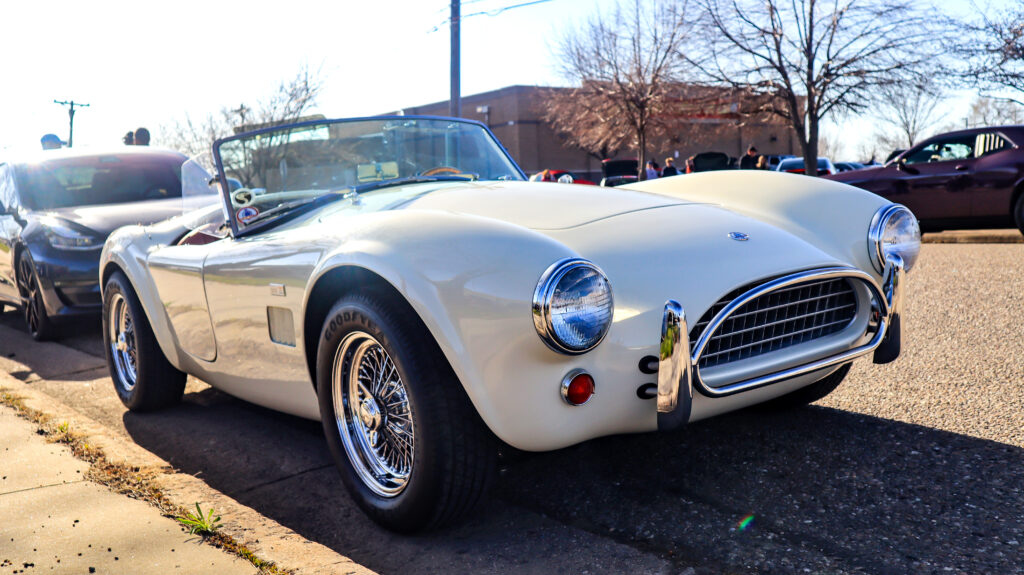
Carroll’s importance to the American automotive industry cannot be understated. Of all his projects, the most notable include the following: The legendary Cobra, the lesser-known but equally legendary Daytona Coupe (aided significantly by Ken Miles), the even more legendary GT (also aided by Ken Miles), the Sunbeam Tiger, the Mustang GT350, and the Turbo Dodges of the 80s (the Omni GLH/GLHS, CSX, and Shelby Lancer). Even if Carroll wasn’t the main engineer in all of those instances, his know-how and winning formula helped to create some of our most impressive –or underrated– automotive legends to date.
Yet, when it came to the Viper, Carroll was relegated to the role of consultant. Bob Lutz, Roy Sjoberg, Richard Winkles, Tom Gale, Herb Helbig, and many others in the immediate development team (lovingly known as “Team Viper”) had much more say in the evolution of the car than Mr. Shelby ever did. Remember that Pacifica Prototype I mentioned earlier? In one version of the story, it’s said that the car was largely made just to appease Carroll’s vision for the Viper. Namely a smaller, lighter, V8 sports car rather than the monstrous V10 supercar Bob Lutz envisioned. Guess who’s idea won out.
Indeed, Carroll was an adviser to the project, rather than a full-time member of it outright. To put it another way: Carroll graded the team’s homework, but he wasn’t part of the study sessions himself.
He also wasn’t whom the team needed to convince the Viper deserved a life as a production car either. For those aspirations to be met, the team had to create a working (full-blooded) “mule” that summed up their ambitions (this car was known as VM-01). Once completed, the next job was getting the project green-lit by Chrysler executives. Chief among them was Bob Lutz himself. While he might’ve had the initial spark, it was Team Viper that made sure it didn’t fizzle out.
Carroll did have an integral part in the creation of the Viper, that much is undeniable. Without the Cobra, there would likely be no Viper. However, beyond inspiration and advice, more credit should be given to Bob Lutz and the frequently mentioned Team Viper for truly bringing the car to life. Without them, arguably more so than Carroll, we wouldn’t have a Viper.
Assumption 3: The Mid-Engine Viper idea


In the video, it’s claimed Lee Iacocca gave Carroll a twin-turbo NASCAR engine for their Pantera project. Apparently Lee and Carroll were going to make the Viper mid-engine rather than front-mid-engine like it ultimately was. Now this is false for reasons made abundantly clear in the previous section, but it’s also false because of yet another timeline disparity.
Outside of Carroll and Lee not being the originators for the car, Team Viper wouldn’t consider a mid-engine proposal until after the Gen 2 arrived. That dates the grainy mid-engine photos found on the internet sometime after 1996 but likely before 2000, and considering the mid-engine proposals show a lot of Gen 2 design features, I think that’s absolutely the case.
Not only that, but why would you use a mid-engine car to develop a front-mid-engine car? The physics, packaging, and dynamics of the two layouts are vastly different. What sense does it make to put yourself even further behind the curve? During the initial development phase for the C8 Corvette, Chevrolet had a reason for mangling a Holden Ute the way they did.
All of that might not even be the most egregious part of this story though…
Problem 3: A complete lack of evidence

I said at the beginning that I’d get to this issue later on, and now we’re finally here. In the video, they do diddly squat to back up their claims. I’ve rarely seen so much “Trust Me Bro” sourcing in my life. The main presenter for the video claims that, because this car was a secret project, there aren’t any photos of Carroll or Chrysler executives with the car. While that does –admittedly– make sense, it comes off as more of a cop-out. You cannot make such wild claims as he does without some sort of corroborating evidence, otherwise it comes off as an excuse rather than an explanation.
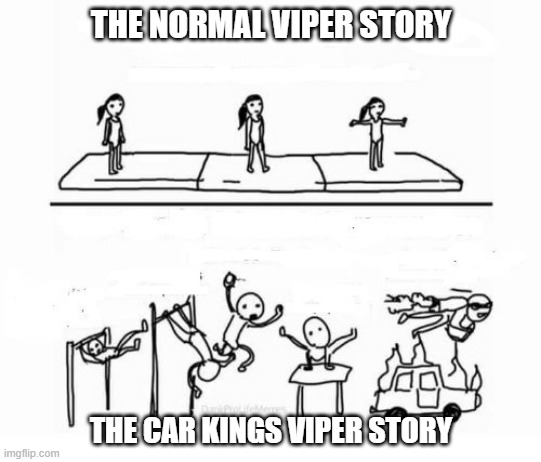
However, there are other means of corroborating evidence. An old article, a video clip hinting to its existence and purpose, perhaps an old leaked document, and more. The lack of photos isn’t the Achilles Heel of this story, the lack of all evidence is the Achilles Heel of this story. Oh yes, not only do they fail to present photos, they fail to present any other kind of evidence to legitimize their claims. They even fail to attribute that 1987 date to anything important. No really, five minutes into the video, the main presenter creates a –very– rough timeline about Carroll and Lee’s endeavors (a photo of which you can see in Problem 1). Below is a direct quote from the video itself of him explaining the timeline.
“Here’s the deal for those of you not taking notes: In 1962, with Lee Iacocca’s help, Carroll Shelby builds the AC Cobra. The Cobra’s racing dominance leads to another collaboration on the GT40, and ultimately Ford upsetting Ferrari at Le Mans in 1966. Fast forward to 1991, Shelby and Iacocca’s final collaboration –the Dodge Viper– is released. Leaving our Pantera to bridge the gap between these cars.”
See? An utter failure to link the 1987 date to anything relevant. That’s merely a coincidence at best and desperately grasping for straws at worst. No photos, no articles, no news clips, no documents, no nothing. At the risk of sounding harsh, this is nothing more than blatant fabrication on the part of Car Kings. Once again though, do not take my word for it, check out this forum post from the Viper Owner’s Association: https://driveviper.com/forums/threads/28191-DeTomaso-Pantera-test-mule-for-Viper?highlight=pantera
Now before you scoff and say “what importance could a Forum possibly have” you should know that the VOA isn’t your run-of-the-mill car forum. No no no, it’s a proper association for those who own Vipers. With that comes the deeper connections you’d expect a group like that to have. At the Viper Days Reunion event held last August, I saw and met some of the original members from Team Viper! Specifically Richard Winkles (the Engine God), Roy Sjoberg, and Herb Helbig (among others). The VDR wasn’t even a VOA event, yet they still came out to attend! If that doesn’t speak to the closeness of the Viper community then I don’t know what does.
In any case, member Viperenvy (another attendee from the VDR) is one such person who has those deeper connections to Team Viper. Check out his comments specifically, as he reached out to people like Bob Lutz, Tom Gale, and John Fernandez (all Team Viper people) for their thoughts on the validity of this story. For those unwilling to read the link, they all said it was untrue.
Case: Closed.
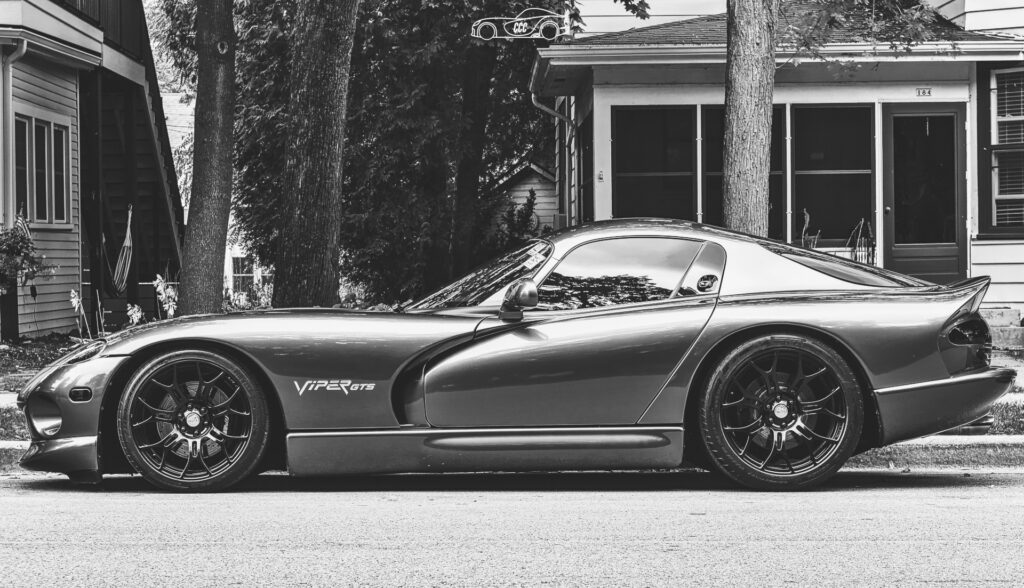
Let’s not sugarcoat things, there are quite a few problems with the video. From the incorrect timeline, the various assumptions necessary for their story to be plausible, to the incorrect crediting of who had the idea for the Viper. All the fundamentals get butchered and yet there’s still a greater sin being committed, and that’s the sin of deceit. Allow me to elaborate…
What Car Kings have here is only a theory. This is obvious when you consider –among other things– the lack of proof necessary to believe or proclaim otherwise (see this entire article). However, none of the expected uncertainty for a theory is present in the video or its headline. The title of the video doesn’t say “the potential connection between this Pantera and the Dodge Viper” (or something to that effect), and the direct quote above doesn’t read “possibly leaving our Pantera to bridge the gap between these cars”. There’s no –much needed– qualifier that indicates what’s being stated isn’t a certified fact. A necessity for being intellectually honest, which everyone should be in iffy situations like this. Shame Car Kings felt it superfluous in the name of clicks and views…
If you’ve made it to the end, then congratulations! You don’t win anything, sadly, but go you for sticking with it! This is very possibly the last long article I’ll write on DriveTribe, so I hope you learned something and enjoyed the read! I’ve still got a goodbye post to make so we’ll see if that ends up being long or not. In any case though thank you for reading! I’ll see you all on the flip side.